

Spain B2B e-invoicing mandate: timeline and requirements
Prepare for mandatory structured e-invoicing and the communication of invoice and payment information in Spain.



Spain is introducing mandatory electronic invoicing for B2B transactions under the Ley Crea y Crece initiative.
Royal Decree 238/2026 defines the main architecture of the future system, including structured invoice formats, platform interoperability and invoice information obligations. The final implementation dates remain dependent on the Ministerial Order regulating the public electronic invoicing solution.
For finance teams, this is about more than generating an electronic invoice. Organisations must connect invoice exchange, ERP processes, payment information and operational ownership across the full invoice process.
What is changing for invoicing in Spain?
Businesses and self-employed professionals within scope will be required to issue and receive structured electronic invoices.
A PDF sent by email will not qualify as a compliant electronic invoice. Invoice data must be structured and machine-readable so it can be processed automatically by business systems.
The Spanish reform is designed to:
- Reduce administrative work
- Improve invoice traceability
- Increase payment transparency
- Help address late payments
- Accelerate business digitalisation
In addition to exchanging structured invoices, recipients will need to communicate specific invoice and payment information.
Regulatory and technical preparation
The Royal Decree 238/2026 establishes the main legal framework.
The e-invoicing framework includes:
- Mandatory structured B2B e-invoicing
- Public and private platform participation
- Platform interoperability
- Permitted invoice formats
- Invoice and payment information obligations
- A central public invoice repository
The final Ministerial Order will complete the technical and operational framework.
Spain will introduce the mandate in phases. The legal implementation periods are fixed, but the corresponding calendar dates depend on when the final Ministerial Order enters into force. The dates in the Spain B2B e-invoicing timeline reflect the current draft and may therefore still change.
Last reviewed: 7 August 2026. The statutory implementation periods are established, but the corresponding calendar dates remain subject to the final Ministerial Order.
Spain permits four structured invoice syntaxes aligned with the EN 16931 semantic model:
- UBL
- UN/CEFACT CII
- EDIFACT invoice messages
- Facturae
Private platforms must be able to transform invoices between the permitted syntaxes while preserving their authenticity and integrity.
Peppol is not mandated as Spain’s national exchange network. Peppol BIS messages may, however, be valid for private-platform exchange when they use UBL and comply with EN 16931.
The public electronic invoicing solution will use UBL.

Spain’s public and private e-invoicing model
Spain is introducing a hybrid public-private model.
Businesses may exchange invoices through:
- The public electronic invoicing solution managed by the Spanish Tax Agency.
- Private platforms that meet the regulatory requirements.
- A combination of both.
Private platforms must be able to interconnect. Businesses cannot force customers or suppliers to use one predetermined provider.
When an invoice is issued through a private platform, a faithful copy in UBL must simultaneously be sent to the public electronic invoicing solution.
The public solution will therefore also act as a universal invoice repository and receive information relating to payment due dates, invoice rejection and full payment.
This model creates flexibility, but also increases the need for reliable integrations, consistent master data and clear ownership of invoice and payment information.
Invoice status and payment information to comply with the Spanish mandate
Spain introduces two related communication obligations.
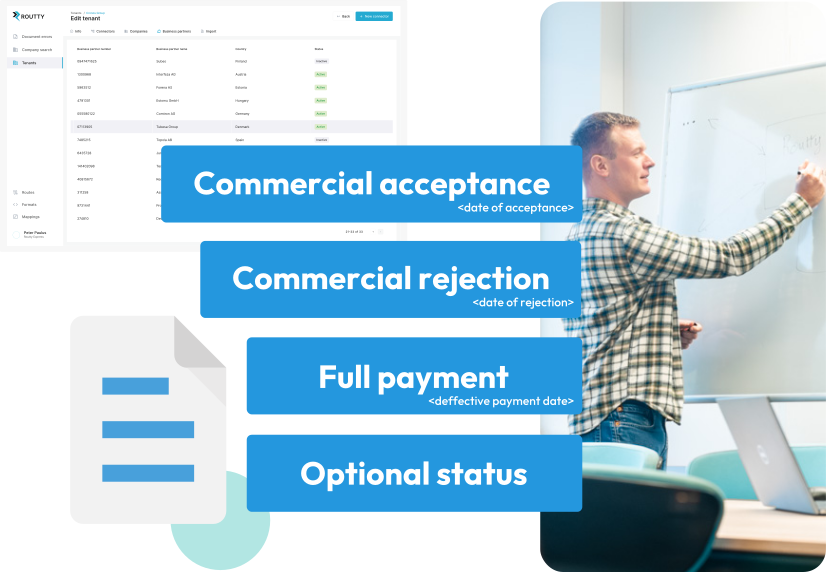
Recipients must inform the invoice issuer of:
- Commercial acceptance or rejection, including the relevant date.
- Full payment, including the effective payment date.
These status updates must be communicated within four days of the relevant event. Saturdays, Sundays and national public holidays are excluded from this period.
Regardless of whether invoices are exchanged through the public solution or a private platform, recipients must also communicate rejection or full payment to the public electronic invoicing solution. The payment due date must also be reported.
In the absence of a rejection or subsequent corrective invoice, the invoice is presumed to have been accepted.
Optional status information exchanged between trading parties may include:
- Partial acceptance or rejection.
- Partial payment.
- Assignment of the invoice to a third party.
This means compliance depends on more than invoice delivery. Organisations also need reliable access to workflow, invoice and payment information across their ERP and finance systems.
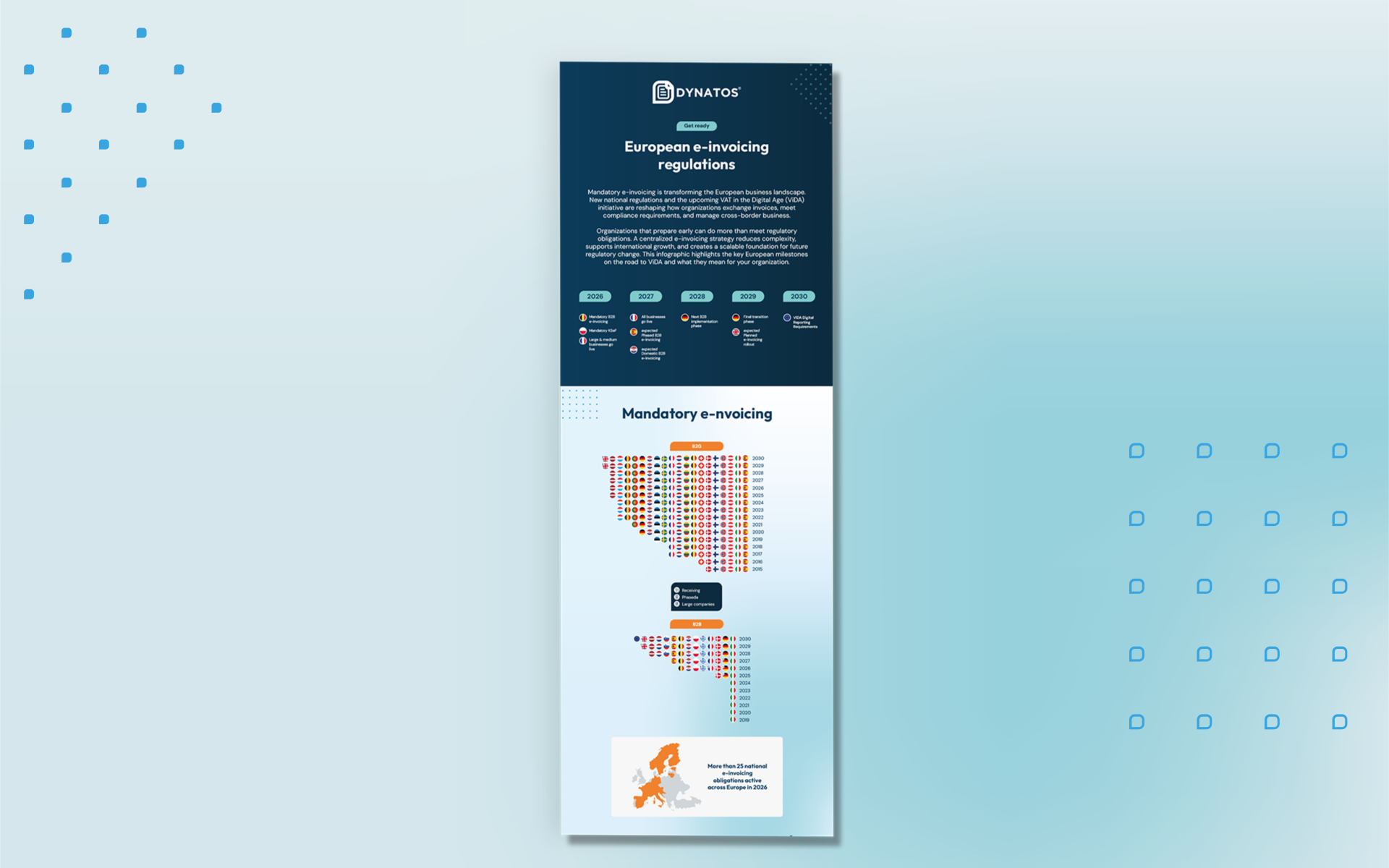
For a broader view of national timelines and European developments, download the e-invoicing regulations infographic.
Download
How to prepare for Spain’s e-invoicing mandate
The final calendar dates may still change, but the operational direction and statutory implementation periods are clear.
Preparation should focus on:
- ERP and integration readiness
- Invoice, payment and master data quality and availability
- Platform and channel strategy
- Customer and supplier onboarding
- Ownership of invoice and payment communications
- Exception handling and validation
- Governance across finance, tax and IT
Experience from e-invoicing mandates across Europe shows that invoice formats are rarely the only challenge. Integration, onboarding and internal process ownership often require more time than expected.
Starting early gives organisations time to identify gaps without compressing implementation, testing and onboarding into the final months before the mandate.
Prepare for the Spanish mandate with Routty
Routty helps organisations connect their ERP landscape to compliant invoice exchange channels and manage structured and unstructured invoice flows through one operational platform.
With Routty, organisations can bring together:
- Electronic invoice exchange
- Format transformation and validation
- ERP integration
- Invoice routing and monitoring
- Auditability and operational visibility
- Multi-country e-invoicing requirements
Dynatos helps finance, tax and IT teams assess the impact of the Spanish mandate, define the right integration and platform approach, and prepare their processes for the required invoice and payment communications.
The objective is not only to meet the Spanish requirements. It is to create a scalable invoice infrastructure that supports compliance, continuity and operational control across countries.
Frequently asked questions
Mandatory e-invoicing will apply:
- 12 months after the final Ministerial Order enters into force for businesses and professionals whose annual volume of operations exceeded €8 million in the preceding calendar year.
- 24 months after the Order enters into force for the remaining businesses and professionals within scope.
The current draft proposes 1 October 2026 as the effective date of the Ministerial Order. If this date is retained, the first phase would begin on 1 October 2027 and the second phase on 1 October 2028.
These calendar dates are not yet final.
The mandate applies where the issuer is subject to the Spanish invoicing rules and the recipient is a business or professional whose business establishment, permanent establishment, domicile or habitual residence is in Spain, provided that the transaction is directed to that Spanish location.
International groups may therefore be affected through Spanish entities or permanent establishments. A Spanish VAT registration alone does not automatically determine whether a transaction falls within scope.
No. A compliant electronic invoice must contain structured, machine-readable data.
During the first twelve months of the mandate for organisations above the €8 million threshold, issuers must normally also provide a readable PDF unless the recipient expressly agrees to receive the invoice in its original structured format.
It is the public infrastructure developed and managed by the Spanish Tax Agency.
Businesses may use it to issue and receive invoices. It will also act as the universal repository for electronic invoices and receive required information relating to payment due dates, invoice rejection and full payment.
Its detailed technical operation remains subject to the final Ministerial Order.
No. Spain is not introducing Peppol as its mandatory national exchange network.
The Spanish system supports a public solution and interoperable private platforms. Peppol BIS messages may be valid in private exchanges when they use UBL and meet EN 16931 requirements.
No.
Spain’s invoicing-software rules under Royal Decree 1007/2023 regulate the integrity, traceability and preservation of invoice records. VERI*FACTU is one method of complying with those rules by transmitting invoice records to the Spanish Tax Agency.
The B2B e-invoicing mandate regulates the structured exchange of invoices and the communication of invoice and payment information. The frameworks are related but legally distinct.
A technical validation error may prevent an invoice or status message from being accepted by a system and may require correction and resubmission.
A commercial rejection is different. It reflects a disagreement between the trading parties and does not automatically make the invoice technically invalid. Depending on the situation, a corrective invoice may be required.
Innovative software, impressive results




France e-invoicing go-live hig…
France’s e-invoicing mandate is now live, and early figures show that many invoice flows still fail compliance checks. The issue is not only technical connectivity. Missing fields, inconsistent VAT data and incorrect identifiers show why businesses need stronger invoice data validation, master data control and exception handling.
Liveblog