
The Slovak e-invoicing mandate: preparing for mandatory B2B e-invoicing
Slovakia is preparing for mandatory e-invoicing, with electronic invoicing legislation becoming effective from 1 January 2027.



The mandate covers more than the invoice format. Every e-invoice is exchanged over the Peppol network through an accredited provider, and the invoice data is reported to the Slovak Financial Administration almost immediately. For businesses in Slovakia, the change reaches invoice creation, delivery, receipt and tax reporting.
International organisations should not treat Slovakia as a one-off local project. It is one of several national mandates arriving ahead of the EU’s VAT in the Digital Age (ViDA) reforms, alongside countries such as Germany, France, Denmark and Spain.
Finance teams that handle each country separately end up with a patchwork of formats, providers and deadlines that is hard to control.

What is the Slovak e-invoicing mandate?
Slovakia is replacing its current, mostly voluntary approach with a mandatory model of structured e-invoicing combined with near real-time e-reporting. The Slovak Financial Administration oversees the programme. Until now, the government IS EFA platform was used mainly for invoices to public bodies. The new model does not route invoices through a central government portal. Instead, invoices travel between businesses over Peppol, with the tax authority receiving the data in parallel. This is often called a five-corner model.
What counts as an e-invoice in Slovakia?
Under the Slovak invoicing mandate, an electronic invoice is a structured XML file based on UBL 2.1. It must follow the Peppol BIS Billing 3.0 specification, including the Slovak-specific rules (CIUS), and comply with the European standard EN 16931. A PDF, image, or scanned document does not qualify, even if sent electronically.
How are invoices delivered?
Invoices must be sent and received through an accredited Peppol service provider, known locally as a “digital postman”. The Slovak tax identification number (DIČ) identifies and addresses businesses on the network.
What about e-reporting?
Alongside each invoice, a separate tax data document (SK TDD) containing the key invoice data is sent to the Financial Administration. This happens within minutes of transmitting the invoice. This reporting layer is what makes the Slovak model a continuous transaction control system rather than a pure invoice-exchange requirement.
A draft amendment to the VAT Act also proposes easing buyers’ reporting duties until mid-2030. Details may still change as legislation and technical guidance develop, so companies should design their implementation to absorb late adjustments.
Who is impacted by the Slovak e-invoicing mandate?
The obligation to issue e-invoices applies to VAT payers for domestic taxable supplies to businesses and the government. This covers companies established in Slovakia and foreign companies with a seat, place of business or fixed establishment in the country. Some supplies fall outside the mandate, including VAT-exempt supplies and cases where a simplified invoice is allowed.
The obligation to receive e-invoices is broader and applies to all in-scope businesses. To receive invoices, a company must register on the national e-invoicing portal and choose its digital postman. Many organisations overlook this onboarding step, and the network cannot reach them until it is done.
International groups are often affected even when they handle invoicing outside Slovakia. Shared service centres, regional finance hubs, and central ERP platforms all need to issue, receive, and report Slovak invoices correctly. They also need to keep those flows consistent with processes in other countries.
The Slovak mandate affects the full invoice lifecycle, not only the invoice format. Once invoices become structured data with a parallel feed to the tax authority, several processes change at the same time:
- Issuing and delivery through an accredited Peppol provider
- Receipt and validation of incoming e-invoices
- Approval and exception handling in accounts payable and receivable
- Near real-time reporting of invoice data to the Financial Administration
- Archiving for ten years, with guaranteed integrity and authenticity
The reporting requirement leaves little room to fix errors afterwards. Tax identifiers, VAT codes, customer details and bank account information need to be correct at the moment an invoice is issued, so master data issues that a PDF process quietly absorbed will surface immediately.

What should businesses do now?
Start by mapping which of your entities, VAT registrations and establishments in Slovakia fall within scope, both as suppliers and as buyers. Then review how invoices are currently issued, received and processed for those entities.
Confirm with your ERP or accounting software vendor that it can produce and process Peppol BIS Billing 3.0 invoices under the Slovak rules and support SK TDD reporting. Choose an accredited digital postman and complete registration on the national portal so that you can receive invoices.
Before go-live, check the quality of your supplier and customer master data, VAT code mapping and bank details. Define who owns rejected invoices and reporting errors. Confirm that your archiving setup meets the ten-year retention requirement. Communicate with key trading partners early so that both sides are ready to exchange invoices from day one.
Starting early gives finance, tax and IT time to test with real trading partners and resolve data gaps before go-live. It also creates room to improve invoice processing rather than only meeting the minimum requirement. The proposed penalty-free period in early 2027 has not yet been enacted, so companies that plan around it are taking a real risk.
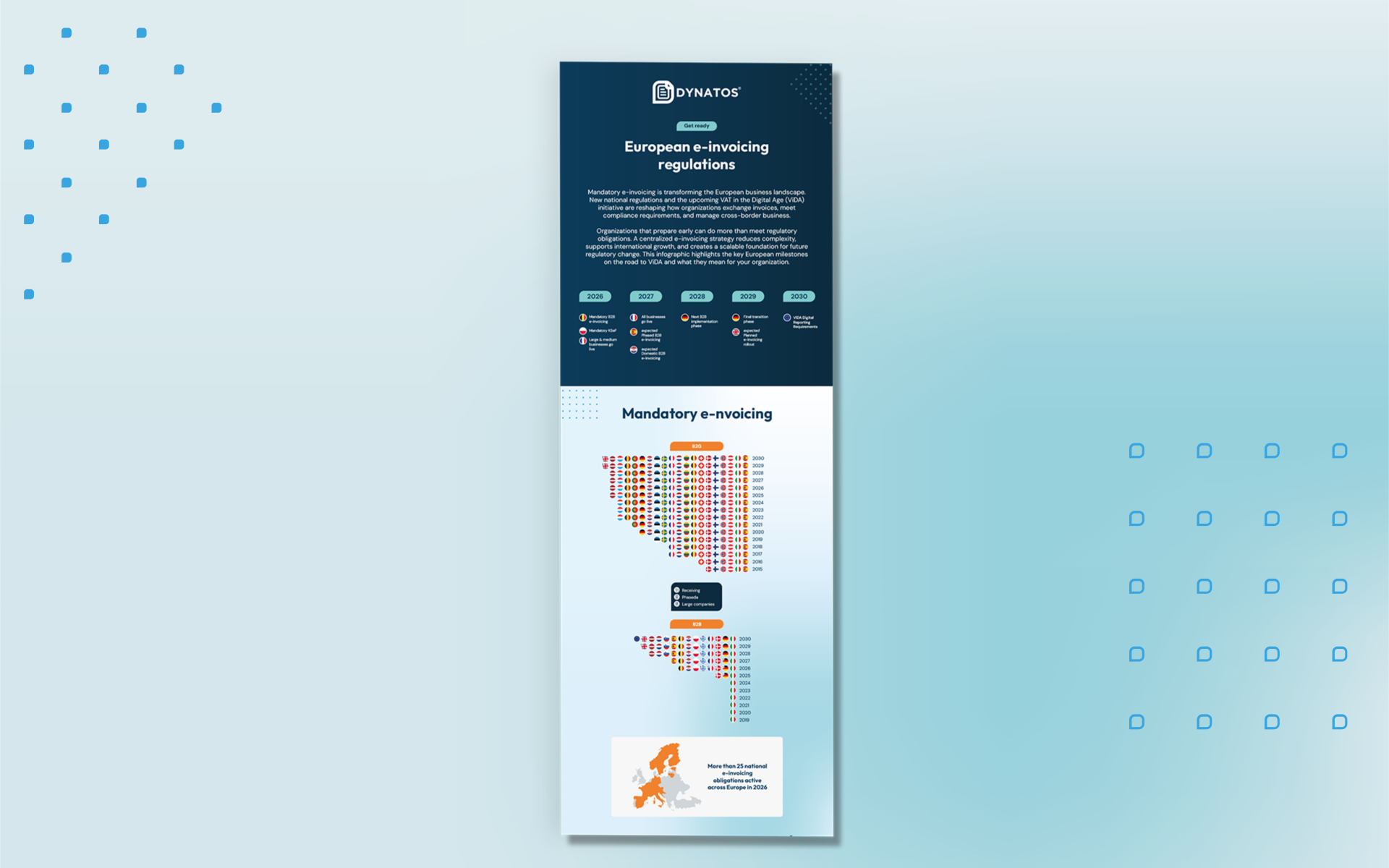
For a broader view of national timelines and European developments, download the e-invoicing regulations infographic.
Download
How Dynatos supports the Slovak e-invoicing mandate
Dynatos helps organisations turn the Slovak requirements into processes that work in daily finance operations. We assess which of your entities and flows are in scope, identify gaps in systems and data, and design an implementation approach that fits your wider European setup.
With Routty, businesses can manage Peppol invoice exchange, country-specific compliance and ERP connectivity across multiple countries from a single platform.
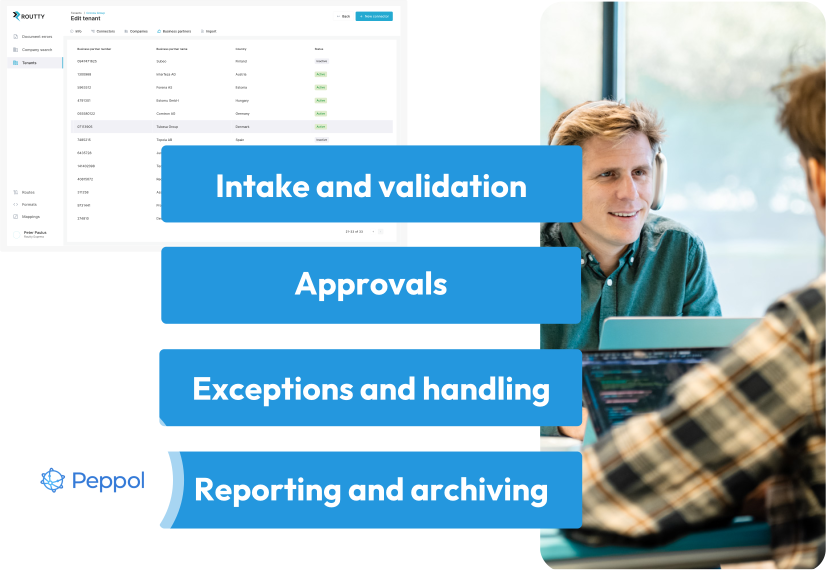
Our teams combine e-invoicing expertise with hands-on finance transformation experience. We look beyond the technical specification to how invoices actually move through your organisation, from intake and validation to approval, exception handling, reporting and archiving.
Frequently asked questions
No. For domestic B2B and B2G transactions in scope, only structured XML invoices exchanged via Peppol are valid.
It is the local name for an accredited Peppol service provider that sends and receives e-invoices on a company’s behalf.
Yes, if they have a seat, place of business or fixed establishment in Slovakia. Foreign companies that are only VAT-registered should check their position with an adviser.
A draft amendment proposes a penalty-free period from 1 January to 31 March 2027. It has not been enacted yet, and the obligation to issue compliant e-invoices would still apply.
Innovative software, impressive results