
The Danish e-invoicing mandate: timeline and requirements
Denmark requires B2G e-invoicing and is expanding digital bookkeeping requirements. Learn what NemHandel, Peppol, SAF-T and Danish e-invoicing mean for your finance processes.



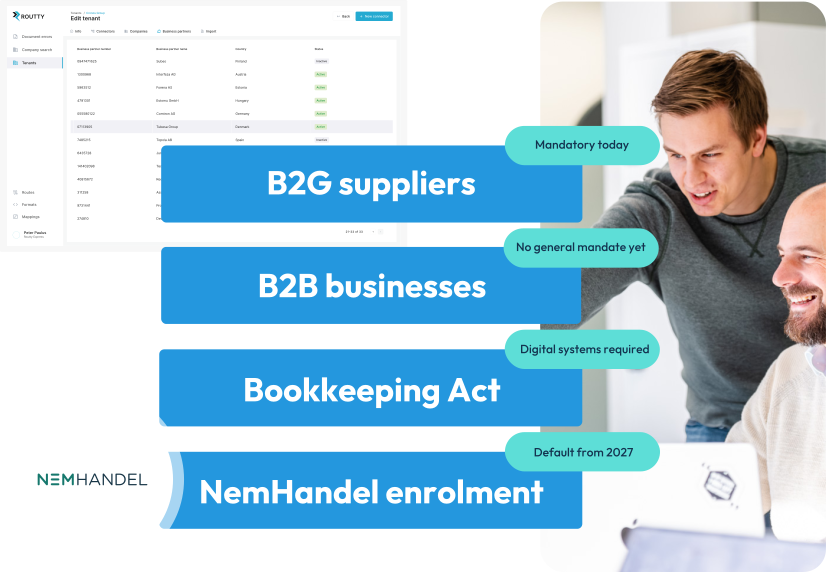
Denmark has long been one of Europe’s frontrunners in electronic invoicing. Business-to-Government e-invoicing is already mandatory, while there is currently no general Business-to-Business e-invoicing mandate.
However, Denmark’s digital bookkeeping requirements are moving companies towards more structured, automated and connected finance processes. From 2027, providers of registered digital standard bookkeeping systems are expected to enrol business users in the NemHandel register by default, unless those businesses actively opt out. For organisations operating in Denmark, e-invoicing readiness is therefore not only about public sector invoicing. It is also about preparing systems, data and processes for digital bookkeeping, SAF-T readiness and future interoperability through NemHandel and Peppol.
Understanding e-invoicing in Denmark
Denmark requires suppliers to public authorities to send electronic invoices in a structured format. These invoices are exchanged through the Danish NemHandel infrastructure or supported Peppol channels, enabling public authorities to receive and process invoice data digitally.
For B2B transactions, there is currently no general mandatory e-invoicing obligation. Companies can still exchange invoices through other channels, depending on commercial agreements and internal processes. This makes Denmark different from countries such as France, Germany or Spain, where broader B2B e-invoicing obligations are being introduced.
Still, Denmark should not be ignored in a multi-country e-invoicing mandates strategy. The country’s digital bookkeeping framework requires many businesses to use digital bookkeeping systems with e-invoicing capabilities. From 2027, the proposed NemHandel default enrolment could also make more Danish businesses reachable for e-invoicing in practice, even without a statutory B2B sending obligation.
What is changing in Denmark?
The Danish Bookkeeping Act introduced mandatory digital bookkeeping requirements for most businesses. Digital bookkeeping systems must support digital accounting processes and enable companies to work with electronic invoices.
In 2026, the Danish Business Authority consulted on additional requirements for digital standard bookkeeping systems. Under the proposal, providers of registered digital standard bookkeeping systems would need to enrol their business users in the NemHandel register for the receipt of e-invoices by default from 1 January 2027, unless a company actively opts out. Systems would also need to check whether a recipient is listed in the NemHandel register and present e-invoicing as the first sending option when available.
This is not the same as a full B2B e-invoicing mandate. Companies are not being directly required to send all B2B invoices electronically. However, the proposal does show Denmark’s direction: making e-invoicing easier to adopt, more visible in daily bookkeeping workflows and more widely available through the national infrastructure.
Denmark has also changed its technical roadmap. The planned OIOUBL 3.0 update has been cancelled. Instead, the Danish authorities are working towards one common e-invoice standard that can cover both national and international requirements. This should reduce complexity and improve alignment with European standards, Peppol developments and future VAT in the Digital Age requirements.
Denmark is expected to continue working towards one common e-invoice standard that can cover both national and international requirements, following the cancellation of OIOUBL 3.0. Companies should monitor the technical roadmap and avoid preparing for OIOUBL 3.0, since that update has been cancelled.
Denmark permits two structured invoice formats, both built on UBL:
- OIOUBL 2.1 (Danish national UBL-based standard)
- Peppol BIS Billing 3.0/4.0 (UBL-based, EN 16931-compliant)
NemHandel, Denmark’s national exchange platform, requires structured document exchange rather than PDF-based invoicing, enabling automated validation, routing and processing across the network.
Peppol is not Denmark’s exclusive exchange network, but it is closely interlinked with NemHandel. The NemHandel registry itself operates as a Peppol Service Metadata Publisher, and Peppol BIS messages are commonly used for cross-border and international transactions alongside the domestic OIOUBL format.
The public sector invoicing solution currently accepts both formats, though Denmark has announced plans to phase out OIOUBL in favour of a localised Peppol BIS 4 standard.
How does e-invoicing work in Denmark?
Denmark uses NemHandel as its national infrastructure for electronic business document exchange. NemHandel supports secure exchange of structured documents between businesses and public authorities.
NemHandel consists of common document standards, a shared recipient register and a transport layer based on the European eDelivery AS4 standard. This means that recipient registration and lookup are central to how e-invoices are exchanged in Denmark.
For international organisations, Peppol is especially relevant because it supports scalable e-invoice exchange across multiple countries. Danish e-invoicing uses structured invoice data rather than PDF-based documents, which enables automated validation, routing and processing.
Recipient identification is an important part of the process. Danish invoice exchange can involve identifiers such as CVR numbers, GLN/EAN numbers or other local identifiers, depending on the recipient and exchange channel.
Who is affected by Danish e-invoicing and bookkeeping rules?
Suppliers to Danish public authorities must be able to send compliant electronic invoices. This applies to B2G transactions and is already part of the Danish invoicing landscape.
For B2B transactions, there is no general mandatory e-invoicing requirement today. However, businesses covered by the Danish Bookkeeping Act must use digital bookkeeping systems and ensure their accounting processes meet the relevant digital requirements. From 2027, businesses using registered digital standard bookkeeping systems may also be enrolled in the NemHandel register by default, unless they opt out.
International organisations with Danish entities should therefore look beyond the question of whether B2B e-invoicing is mandatory today. They should assess whether their ERP, invoicing and AP/AR processes can support structured invoice exchange, local identifiers, digital archiving, bookkeeping data extraction and future interoperability with European standards and Peppol-based exchange.
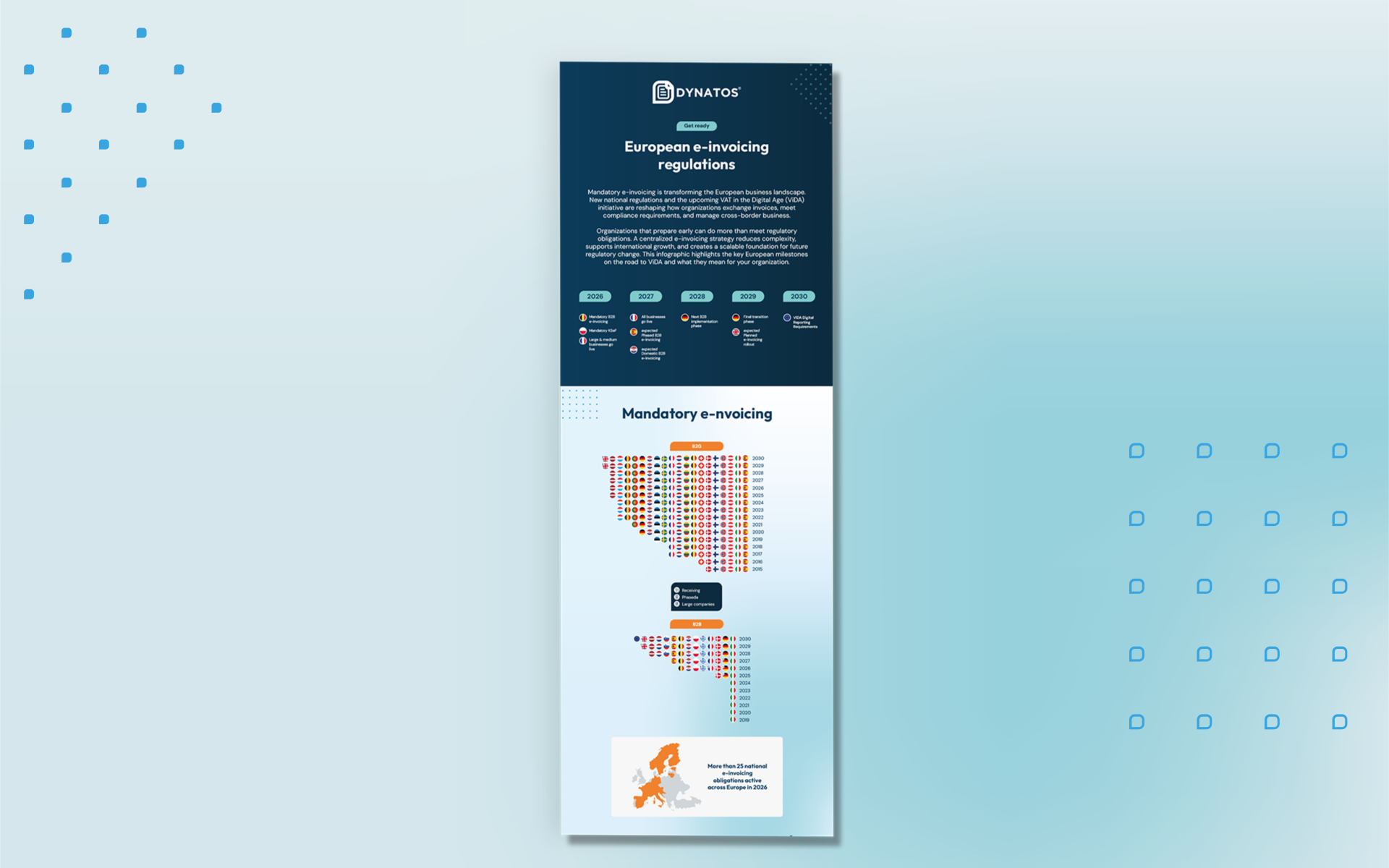
For a broader view of national timelines and European developments, download the e-invoicing regulations infographic.
Download
Why Denmark matters for international finance teams
Denmark may not have a broad B2B e-invoicing mandate today, but it is still relevant for international finance teams. Companies selling to Danish public authorities need to support B2G e-invoicing. Danish entities may also fall under digital bookkeeping requirements, including expectations around structured data, e-invoicing capabilities and SAF-T readiness.
Even without a legal B2B sending obligation, companies may see more Danish customers becoming reachable for e-invoicing from 2027. In practice, this can increase customer expectations around structured invoice exchange, especially where recipients are listed in the NemHandel register.
The operational impact can be bigger than it first appears. Businesses may need to review masterdata, customer and supplier identifiers, invoice mappings, ERP integrations, archive processes, validation rules and reporting readiness.
A fragmented country-by-country approach can quickly become difficult to maintain. Denmark is a good example of why organisations need an e-invoicing strategy that can handle different mandate models, different technical standards and different levels of legal maturity.
How Dynatos supports e-invoicing in Denmark
Dynatos helps organisations prepare for e-invoicing and digital compliance across multiple countries, including Denmark. Through Routty, companies can manage structured invoice exchange, connect to relevant networks and integrate e-invoicing flows with existing ERP and finance systems.
Our approach goes beyond technical connectivity. We help organisations assess mandate impact, translate country-specific requirements into practical finance processes, validate invoice data, manage mappings and support scalable AP and AR operations.
For companies active in Denmark, this means being ready for today’s B2G e-invoicing requirements while also preparing for the broader move towards digital bookkeeping, SAF-T, NemHandel default enrolment, interoperability and structured financial data.
Dynatos supports organisations in building an e-invoicing approach that works across countries, mandates and business models.
Frequently asked questions
For B2G (business-to-government) transactions, electronic invoicing has been mandatory since 2005. For B2B transactions, there is currently no general legal mandate, though this is gradually shifting due to digital bookkeeping obligations and the planned default enrolment in NemHandel from 2027.
Denmark accepts two structured formats, both based on UBL: the national OIOUBL 2.1 format and Peppol BIS Billing 3.0/4.0 (EN 16931-compliant). However, OIOUBL 3.0 has been cancelled — Denmark is now working towards a single common standard, based on Peppol BIS 4, that can cover both national and international requirements.
From 2027, providers of registered digital standard bookkeeping systems are expected to be required to enrol their business users in the NemHandel register by default, unless a company actively opts out. This is not a full B2B mandate, but it does make more businesses reachable for e-invoicing in practice.
All suppliers to Danish public authorities must comply with the B2G mandate. In addition, businesses covered by the Danish Bookkeeping Act are required to use digital bookkeeping systems capable of supporting electronic invoicing and structured data.
International organisations with Danish entities should look beyond the question of whether B2B e-invoicing is mandatory today. They need to assess whether their ERP, invoicing and AP/AR processes can support structured invoice exchange, local identifiers (such as CVR or GLN/EAN numbers), digital archiving, and future interoperability with Peppol and European standards.
Innovative software, impressive results





Advisory, News
PHP vulnerabilities: what users of Tungsten, Coupa, ISPnext and Routty need to know
Recent PHP vulnerabilities have prompted questions about invoice processing software. This overview explains the impact on Tungsten Process Director, AP Essentials, Coupa, ISPnext and Routty, including where patches or further action may be needed.