
The Swedish e-invoicing mandate: structured electronic invoices
Learn how Peppol works, whether B2B e-invoicing is mandatory and what ViDA means for your business.



Sweden already requires structured electronic invoices (e-fakturor) for public procurement covered by its e-invoicing Act. Suppliers invoicing Swedish public buyers must meet this requirement for any procurement initiated on or after 1 April 2019.
There is currently no general mandate for domestic business-to-business (B2B) e-invoicing. Sweden is examining whether to introduce one as part of implementing the EU’s VAT (ViDA) rules. Organisations operating in Sweden should separate the public sector rules that apply today from B2B requirements that may follow.

Is e-invoicing mandatory in Sweden?
It is mandatory only for invoices that result from public procurement. This obligation comes from the Act on electronic invoices following public procurement (Lag (2018:1277) om elektroniska fakturor till följd av offentlig upphandling).
It also covers direct procurement and applies to suppliers whether or not they are established in Sweden.
Structured electronic invoices
To qualify, an invoice must carry structured data that systems can process without manual input. A PDF attached to an email does not meet the Act’s definition.
Invoices should normally follow the European e-invoicing standard, though buyer and supplier may agree on a different electronic standard, and certain exceptions apply. The Swedish National Agency for Public Procurement (Upphandlingsmyndigheten) explains the scope of the law in more detail.
For domestic B2B transactions, structured e-invoicing is not mandatory today. Companies can exchange e-invoices voluntarily and agree on formats and channels with their trading partners.
What is changing in Sweden?
On 5 February 2026, the Swedish government appointed a special investigator under committee directive Dir. 2026:9. The investigator’s task is to work out how ViDA’s e-invoicing and digital reporting requirements should be written into Swedish law. The inquiry must also consider whether e-invoicing and digital reporting should apply to domestic transactions, and if so, how far they should reach.
The report is due by 30 November 2027. That date is a deadline for recommendations, not a start date for a Swedish B2B mandate. The scope, technical model, exchange network and timing of any domestic obligation have not been decided.
Sweden’s tax agency, Skatteverket, has supported ViDA and broader use of e-invoicing, as we covered in our blog Skatteverket’s support for ViDA and e-invoicing. That support signals a direction, but the inquiry still has to produce proposals, and the government still has to decide on them, before confirming any domestic requirement.
Governance of Peppol in Sweden is also shifting. Responsibility for Peppol was scheduled to move from the Agency for Digital Government (Digg) to Upphandlingsmyndigheten on 1 July 2026. Suppliers should watch for guidance from Upphandlingsmyndigheten going forward.
Whether a business is affected in Sweden depends on who it invoices and what kind of transactions it has. The main groups are:
- Suppliers to Swedish public buyers invoicing under procurements covered by the e-invoicing Act and initiated from 1 April 2019, including non-Swedish suppliers.
- Public buyers within the law’s scope, which must receive compliant structured e-invoices and be registered in Peppol.
- Companies trading with Swedish businesses, which face no general domestic B2B mandate yet.
- Organisations with relevant intra-EU cross-border transactions, which should prepare for ViDA. From July 2030, these will need an EN 16931 e-invoice, with invoice data reported to the tax authorities.
The exact impact depends on each business’s entities, transactions and invoice flows, so mapping these is the first step.

Why Sweden matters for international finance teams
Sweden is easy to overlook in a multi-country e-invoicing strategy because it has no general B2B mandate today. Yet businesses selling to Swedish public organisations already have obligations, and ViDA will bring requirements for relevant cross-border EU transactions.
International groups will likely have to meet mandates elsewhere in Europe before Sweden makes any domestic B2B decision. That makes it worth assessing Swedish invoice flows as part of one wider view of ERP integration, invoice data, formats, delivery channels and operational ownership.
For finance teams, the key is to separate what is required now from what might come later. Getting public sector invoicing right today is a concrete task, while investments made with ViDA in mind should stay useful whatever Sweden decides. Both decisions should start from the organisation’s actual transactions, not an assumed Swedish B2B deadline.
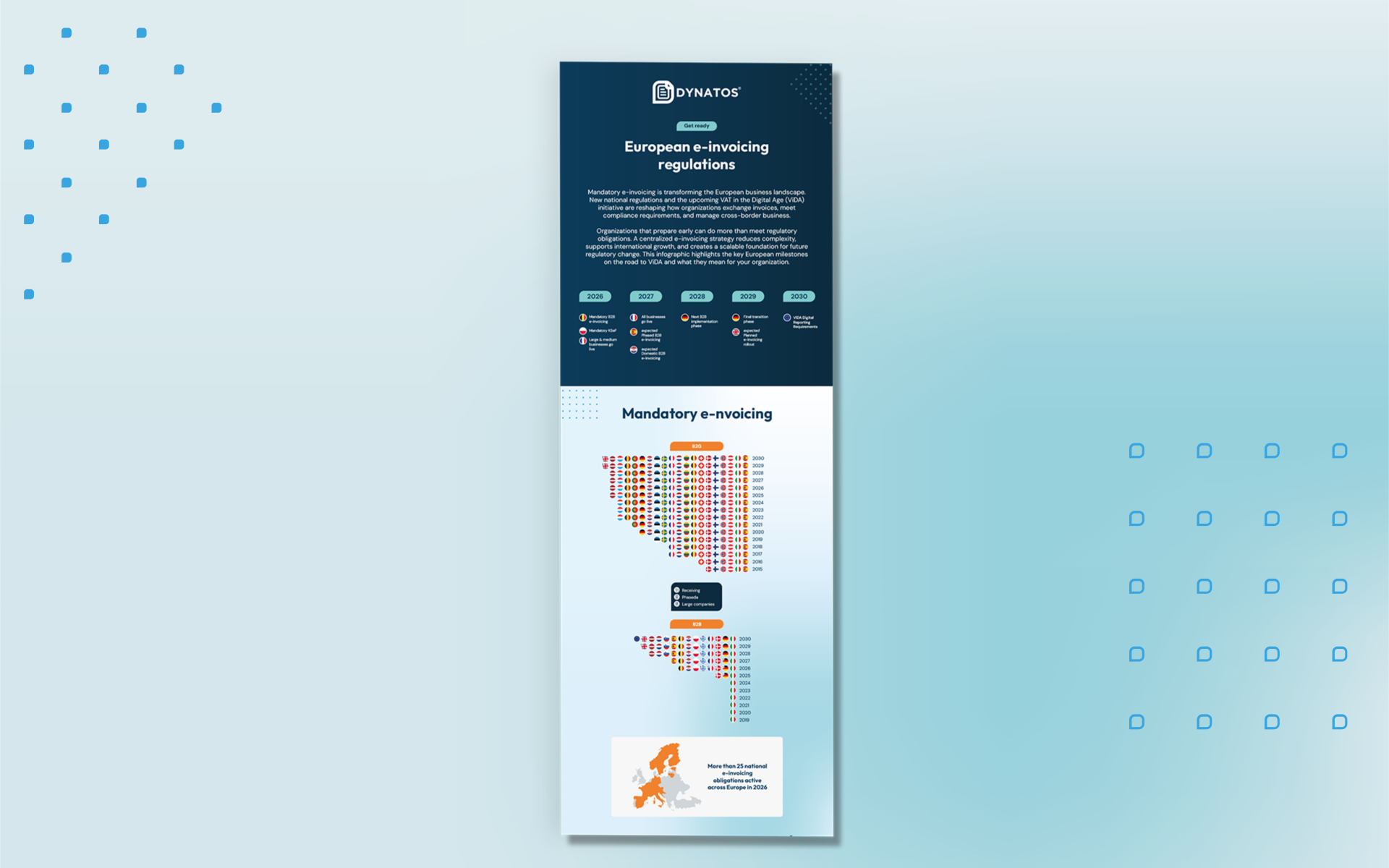
For a broader view of national timelines and European developments, download the e-invoicing regulations infographic.
Download
How to prepare for Swedish e-invoicing requirements
Identify whether your organisation invoices Swedish public buyers. Work out which purchases fall under the current rules and check that your invoices contain structured data in an accepted format. If you still send Svefaktura, plan the move to Peppol BIS Billing 3.
Next, review delivery and monitoring. Confirm each recipient’s invoicing details and the agreed exchange channel, and make sure your team can spot, correct and resend invoices that fail validation or delivery.
Then map the intra-EU cross-border transactions that ViDA will cover. Finance and tax teams should know which entities issue and receive the invoices, where the required data is held and how it moves through ERP and finance systems.
Finally, follow the Swedish inquiry without building a project around an unconfirmed B2B format or deadline. Use this period to strengthen master data, invoice mappings, and integrations that support both current requirements and anything that follows.
How Dynatos supports e-invoicing in Sweden
Dynatos helps organisations work out which Swedish invoicing requirements apply to them and turn them into practical finance processes. This covers public sector invoice flows, structured data, Peppol connectivity, validation, ERP integration and visibility into invoice delivery.
Through Routty, companies can manage invoice exchange across countries and channels while staying in control of data quality and functional processes. We work with customers and partners to identify current gaps then build an approach that can adapt as Swedish and European requirements become clearer.
Sweden’s public sector e-invoicing rules already require action from affected suppliers. Meanwhile, the government is examining whether domestic B2B requirements will follow, and ViDA will bring requirements for relevant intra-EU transactions from 2030.
Dynatos helps organisations meet today’s obligations and formulate informed decisions about their wider e-invoicing architecture.
Frequently asked questions
Not yet. Structured e-invoicing is only mandatory for public procurement. A government inquiry is assessing whether to extend it to domestic B2B transactions and will report by 30 November 2027.
Yes. The E-Invoicing Act also applies to suppliers established outside Sweden.
Not for public procurement. A PDF sent by email does not count as an e-invoice under the Act.
Public buyers must be reachable via Peppol, and it is the recommended channel. Suppliers generally aren’t required to use it if they agree on another compliant option with the buyer.
Innovative software, impressive results